

Transitions Survive When Enforcement Outlives Their Government.
Durable Reforms Shift Enforcement Away from Executives.

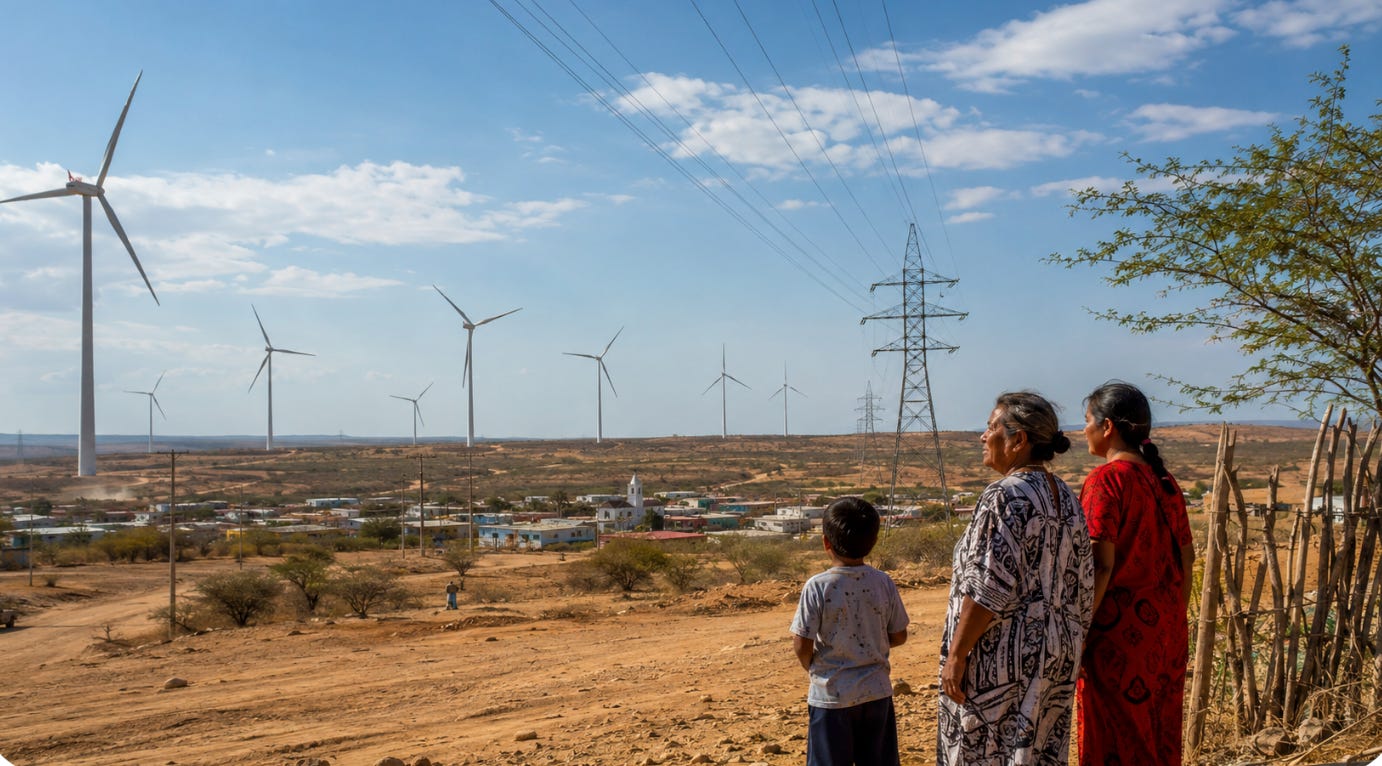
On 31 May 2026, Colombians voted with one of Latin America’s most ambitious energy transitions still unfinished. Non-hydropower renewables had climbed fast from the margins of the electricity mix, and new projects were entering the pipeline. The language of transition had moved from activist circles into state policy. The open question was no longer whether the transition could start. It was whether it could survive the government that launched it.
That question reaches well beyond Colombia. Across Latin America, governments are building renewable power, digital infrastructure, artificial intelligence capacity, and new industrial platforms. Some will outlive their founders; others will not. The difference is in embedding: whether a government moves enforcement beyond executive discretion and builds constituencies that successors find costly to reverse. Drawing on policy feedback and institutional path dependence, this essay tests that claim across five countries and draws the lessons for policymakers.
Credible Commitment Raises the Cost of Reversal.
Policy debates often treat commitment as a political variable. Governments declare priorities, pass laws, announce targets, and assemble coalitions. Yet some transitions collapse despite broad support, while others endure through real turbulence. The dividing line is not enthusiasm. It is the difference between nominal and credible commitment.
Nominal Commitments Track the Current Leader’s Preferences.
Nominal commitments reverse easily because they live inside ministries, presidential offices, or temporary coalitions. When leaders change, the commitment changes with them. Credible commitments work differently: they raise the cost of reversal. They shift enforcement to institutions, contracts, regulators, financing arrangements, or external obligations that outlast any single government.
Policy feedback explains why this matters. Once a policy creates investments, organizations, and constituencies, those actors gain a stake in keeping it. The policy ceases to be a government project and becomes part of the surrounding institutional order. What began as a reform hardens into a system.
Five Mechanisms Move Enforcement Beyond Political Discretion.
Embedding works through at least five mechanisms. Market embedding creates private actors with long-term financial stakes in continuity. Pact embedding builds ownership across parties and institutions. Statutory-epistemic embedding pairs legislation with independent monitoring, while legal entrenchment writes rules into law, locking in either progress or reversal. External embedding raises reversal costs through international agreements, arbitration, or external conditionality.
These mechanisms differ in form but share a function: they move enforcement away from immediate political discretion. That insulation is not the same as success. As recent research on energy transitions shows, embedding buys time but does not end distributional conflict. Transitions that reward winners and ignore losers eventually meet resistance. The real question is, therefore, how much embedding a transition needs.
Thin Embedding Let Mexico Reverse Its Reforms.
Mexico is the clearest diagnostic case. The country did not lack instruments. Electricity auctions from the previous reform cycle drew international attention and delivered highly competitive prices. On paper, the transition was advancing. The architecture beneath it, however, was shallow.
The auctions produced projects but little institutional anchoring. Long-term financing stayed weak, regulatory independence proved fragile, and the reforms’ political foundations remained contested. When priorities shifted under Andrés Manuel López Obrador, his government strengthened the Federal Electricity Commission (CFE) and dismantled the support with surprising ease.
The result went beyond policy reversal: Mexico legally embedded the reversal itself. Recent reforms guaranteeing CFE primacy in dispatch carry a lesson. Embedding is directionless, locking in transformation or retrenchment alike. What matters is which rules become entrenched, and whose interests they serve.
Mexico, therefore, separates the existence of instruments from the depth of their embedding. It had the instruments. It lacked the insulation and sunk commitments that make reversal expensive. Brazil shows the contrast.
Market Constituencies Now Defend Brazil’s Renewable Transition.
Brazil’s energy transition has outlasted governments that agreed on little. That persistence did not come from ideological consensus or steady executive enthusiasm. It came from market institutions. Brazil embedded renewable expansion in the way it bought power and financed projects.
Competitive auctions created long-term power-purchase agreements and a transparent price benchmark that Colombia and Argentina later adapted. Concessional lending from the Brazilian Development Bank (BNDES) reduced risk, and private investors committed large capital over long horizons. As renewable industries grew, they created firms, workers, suppliers, financiers, and regional interests with a direct stake in continuity. This is the policy-feedback mechanism that Meckling and others describe: policies generate industries, industries generate constituencies, and constituencies defend policies.
The outcome is not a perfect transition. Brazil still faces transmission bottlenecks, curtailment, and unresolved questions about fossil fuels. Power-sector success has not delivered economy-wide decarbonization. The mechanism explains persistence, not comprehensive transformation. A transition can become hard to reverse while still facing major coordination and distributional problems.
Persistence still matters. By 2026, auctions kept clearing, and new capacity kept entering the system despite changes of government. The system held because enforcement no longer depended on executive preference. Market embedding had created its own defenders.
A Multiparty Pact Anchored Uruguay’s Energy Transition.
Uruguay reached the same destination by another route. Instead of leaning mainly on market embedding, it built a cross-party settlement around energy security and renewable expansion. The transition had specific roots. Exposure to imported fuels and repeated energy shocks pushed politicians toward a longer-term strategy. They reframed renewable energy as a national objective rather than a partisan project.
The 2008 Energy Policy 2005-2030, ratified in 2010 through a multiparty agreement, anchored the transition as a state policy rather than a government program. That continuity held across administrations. The National Administration of Power Plants and Electrical Transmission (UTE) and the Ministry of Industry, Energy, and Mining (MIEM) became central coordinators. Long-term contracts lowered investor uncertainty, and each new government inherited a system that already held broad legitimacy.
The continuity was striking. Renewable electricity expanded sharply and survived multiple electoral cycles. This is pact embedding. The mechanism differs from Brazil’s, but the outcome is the same: enforcement moved beyond the government that launched it. Alternation, the electoral handover of power from one governing party to its rivals, no longer meant reversal.
Uruguay also marks the limits of borrowed lessons. Small-country successes do not automatically scale to larger, more heterogeneous systems. The achievement is real, but its transferability remains uncertain.
Institutional Insulation Carried Chile Across Political Alternation.
Chile shows a third pathway. Its recent climate and energy architecture combines legislation, independent expertise, and durable planning. The Framework Law on Climate Change and the Energy 2050 state policy set the long-horizon direction. Independent technical agencies, including the Electricity Coordinator and the National Energy Commission, carry it out. Together, they create a statutory-epistemic embedding that separates implementation from day-to-day politics.
Elections still happen, and policy debates continue, yet the institutional architecture remains in place across administrations. The handover from Sebastián Piñera to Gabriel Boric is the clearest example: leadership changed, but the core institutions remained. That persistence rests on more than legislative text. It depends on organizational continuity, technical expertise, and credibility built over time.
Chile, therefore, shows that embedding need not rest mainly on markets or pacts; institutional insulation can also sustain reform. The case carries a warning. Regulatory continuity does not resolve deeper conflicts over extraction, water use, territory, or social legitimacy. Institutional persistence and social acceptance are related but distinct; embedding buys time without ending politics.
Colombia Tests Whether Reforms Outlast Their Champions.
These comparisons return to Colombia. The transition is still young. Renewable capacity has grown fast, much of it procured through auctions adapted from the Chilean and Brazilian models. New projects have entered development, and political leadership has signaled a clear direction.
Recent Climate Wins Rest on Executive Discretion.
The government’s boldest recent moves rest on executive and ministerial discretion. In 2025, it declared the Amazon biome a reserve zone closed to new mining and hydrocarbons. In 2026, it granted the Sierra Nevada de Santa Marta permanent protection. It has joined the Fossil Fuel Non-Proliferation Treaty and co-hosted an international fossil-fuel phase-out conference. Under the framework described in this essay, these are thin commitments: ambitious, but reversible by the next government.
These moves show ambition more than embedding. Institutions remain vulnerable to political change, the constituencies that benefit are still forming, and regulatory arrangements continue to evolve. Fossil fuels still carry substantial weight, and coal remains economically and politically important in regions such as La Guajira and Cesar. Direction is clear; durability is not.
The Coming Transfer of Power Will Tell.
None of this makes reversal inevitable; it makes the transition depend on whether early reforms are embedded before leadership changes. The coming period is therefore a live test. If the transition continues to advance through political alternation, enforcement has migrated into durable institutions. If momentum collapses once leadership changes, it has not. Either way, Colombia lets us watch the mechanism in real time.
Coordination Is the State’s Binding Transition Function.
The state functions that matter most are not the ones that draw the most attention. Strategic vision sets direction. Market shaping moves investment incentives. Investment and service delivery absorb early risk. Adaptive governance and learning address the uncertainty inherent in every transition.
The binding function, though, is coordination and capital mobilization, reinforced by the legitimacy that credible, sustained direction produces. States succeed when they build institutions that move enforcement beyond any single government. They fail when reforms stay dependent on political champions.
The implication is subtle but important. Durable transformation is less about better announcements than about building arrangements that continue to operate when governments change. For fiscally constrained countries, external embedding can matter most. Trade agreements, arbitration systems, multilateral guarantees, and international commitments raise reversal costs where domestic institutions are weak, though they reinforce state capability rather than replace it.
Build Institutions First and Compensate Losers Second.
The lesson is not that every country should copy Brazil, Uruguay, or Chile. Policymakers must embed early. Where market institutions exist, long-duration contracts and credible financing build constituencies with a stake in continuity. Where politics is fragmented, broad pacts beat narrow partisan ownership, and for fiscally constrained states, external commitments raise the costs of reversal. Where governments pursue legal reform, regulatory independence matters as much as the legislation itself.
Persistence Is Only the First Stage of the Transition.
Most importantly, persistence is only the first stage. A transition that survives alternation has achieved something real, but not legitimacy. Distributional costs still bite. Workers, regions, communities, and incumbent industries keep absorbing losses that demand management.
Where transitions reach Indigenous territories, recognition matters. Prior consultation and the treatment of rightsholders, not stakeholders, become part of legitimacy rather than an afterthought. Colombia’s Amazon declaration, reportedly contested due to incomplete prior consultation, shows how quickly an unembedded commitment can be called into question.
The state’s task, therefore, runs in sequence. First, build institutions that can survive alternation. Second, use the time that survival buys to settle the social ledger of the transition. Confusing the two stages produces bad policy; ignoring either produces failure.
Watch Whether Enforcement Survives the Next Government.
The Colombian election is therefore about more than Colombia. It addresses a question facing Latin America’s entire technological transition: can governments build institutions that outlast them? The record from Brazil, Uruguay, Chile, and Mexico gives a clear answer. Transitions survive when enforcement leaves the executive and lodges in contracts, institutions, constituencies, and commitments that successors inherit rather than choose.
That does not make change permanent. It makes reversal more expensive. Over the next 6 to 18 months, the signal worth watching is not the rhetoric of new governments. It is whether the machinery of enforcement keeps running after the politicians who built it leave office.
These Sources Underpin the Essay’s Central Claim.
Acemoglu (2021), Institutional Change and Persistence — Why institutions survive or decay.
Finnegan (2022), Institutional Sources of Economic Transformation — The importance of embedding reforms in autonomous institutions.
Gazmararian (2025), Political Economy of the Clean Energy Transition — Why insulation must be paired with compensation.
Hochstetler (2022), Political Economy of Energy Transition — Brazil’s experience with policy persistence through market institutions.
Karl (1997), The Paradox of Plenty — Resource dependence, institutions, and political persistence.
Meckling (2022), Why Nations Lead and Lag in Energy Transitions — Policy feedback and constituency formation.
Ozel (2025), Climate Politics in Chile and Mexico — Regulatory independence and reversal resistance.
Perez (2002), Technological Revolutions and Financial Capital — How institutions shape technological deployment.