

Why LAC Development Fails When Systems Are Ignored

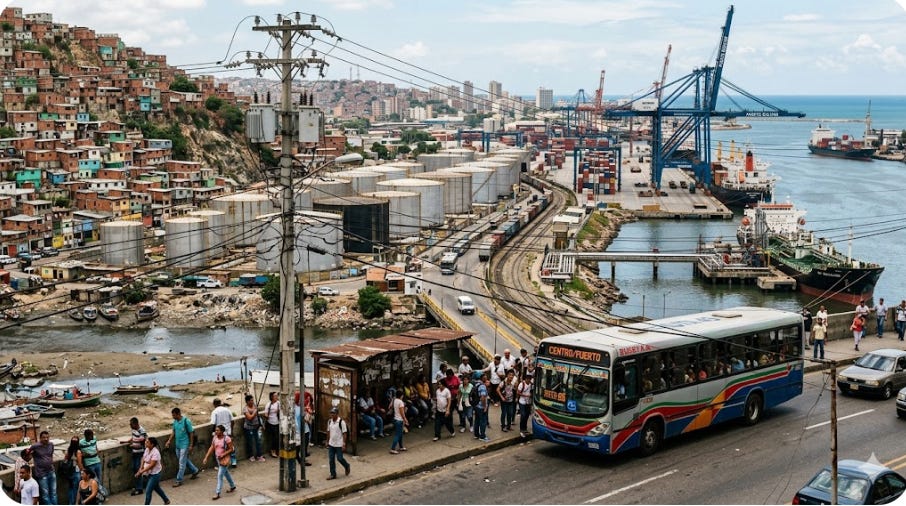
In the early 2000s, Venezuela’s oil boom drove record GDP growth. Two decades later, the economy collapsed, millions emigrated, and basic services failed. The headline numbers looked strong, but the system underneath was weak. This pattern—growth in one area while system-wide limits go ignored—recurs across Latin America and the Caribbean. Commodity windfalls can boost GDP without building the institutions that sustain progress. Those limits then show up as internal shocks that spread through the economy and derail development goals. Durable, inclusive progress comes from coordinated, whole-of-government change.
Today’s development challenges are systemic. You cannot design school curricula without thinking about future jobs, because labor needs shift as economic priorities change. When inequality deepens, or basic services become more expensive, political coalitions can break apart. Shocks—external and internal—arrive often and test social, economic, and cultural resilience. Managing their cascading effects, therefore, calls for integrated, multi-sector action.
Development is multidimensional. It improves how the whole system works, not just what the economy produces. That requires a clear view of how economic, social, and ecological domains interact. Too often, macro thinking treats GDP growth as the goal and labels the hardest problems as “shocks.” Yet those shocks are usually system-wide and demand an integrated, whole-of-government response. The next section explains why GDP often misleads as a development yardstick. I then show how modern shocks cascade across systems, before turning to what capable states do differently to manage these risks.
Why GDP Misleads About Real Development
GDP is a limited measure of development progress. It captures market output, but not changes in other assets, including cultural and natural capital. GDP-focused models treat those assets as outside the economy, so society or the environment pays the costs. If GDP rises while poverty, inequality, welfare, cultural cohesion, or the environment worsen, that growth is unlikely to last. In LAC, rapid GDP growth from oil and commodity booms has often been disconnected from real transformation.
A strict GDP focus can hide warning signs and weaken a state’s ability to adapt. Guyana’s oil boom and world-record GDP surge may distract from poverty, inequality, and weak implementation capacity. The same pattern preceded Venezuela’s collapse. When resource extraction drives growth, GDP can blur short- and long-term signals and lead to policy mistakes.
Costa Rica offers the contrast. Its GDP per capita sits below several regional peers, yet it posts higher life expectancy, stronger health and education outcomes, and a higher Human Development Index. The country has spent decades paying landholders to conserve forests, rebuilding tree cover from roughly a quarter of the country in the 1980s to over half today. It now generates nearly all its electricity from renewables.
None of that shows up in GDP, but it has produced a more durable development trajectory than many higher-output neighbors. A more integrated measurement approach would force these trade-offs into view. It would also keep attention on the state capacity that durable development requires.
Several efforts aim to measure more than GDP. They add indicators for inequality, poverty, education, access to health care, and natural capital. Tracking capital stocks and flows—socio-economic, cultural, and natural—can also flag future gaps and likely derailers. The Human Development Index and inequality-adjusted HDI add dimensions such as life expectancy, education, and income distribution. The Multidimensional Poverty Index assesses welfare, living standards, and access to health and education services. These measures are more complex, but they push countries away from siloed approaches and toward a fuller picture of change.
Looking beyond GDP matters because it shows how whole systems work, including assets, flows, and controls. However, these approaches require the state to work across disciplines.
Why Modern Shocks Hit Harder in LAC
How shocks are becoming more frequent
Urbanization concentrates people and assets, which raises exposure to shocks. As a result, shocks can become more frequent and more disruptive. Recent examples include energy security shocks, such as rising fossil fuel prices amid conflicts in the Middle East. Similar energy and food shocks followed Russia’s war on Ukraine. LAC also faces energy shocks tied to an intense El Niño, which can bring drought-driven hydropower shortages, fiscal strain, and lower productivity. Climate-related shocks are also more frequent and intense, including floods in Rio Grande, Bahia Blanca, and the Andes.
Disease shocks add another layer. Brazil recorded the largest dengue epidemic in history in 2024, with 10.2 million cases, yet it barely registered in international coverage. At the same time, volatility, inequality, corruption, weak institutions, and criminal networks are reshaping politics and security in Ecuador, Brazil, Argentina, Paraguay, Haiti, and Peru.
How shocks cascade across systems
Countries are complex systems where effects run in both directions. Because systems depend on each other, risk can cascade: a disruption in one area can trigger failures elsewhere. Chile’s 2023 wildfires, driven by extreme heat and drought, destroyed homes and infrastructure and disrupted agriculture and other productive systems. That produced widespread economic and social losses. Thresholds and non-linear dynamics increase risk, as seen in the Amazon tipping point. There, deforestation and warming can weaken the rainfall cycle and harm agriculture in the southern savannas. Trade and supply chains also link production across borders, so droughts in Panama can disrupt the Canal and global shipping. Large shocks can therefore spread through networks, pushing states to build resilience—the capacity to absorb shocks.
What does this mean for how we govern? Many of today’s problems have no single fix. They cut across sectors and require multiple disciplines working together. When ministries work in silos and assume the world will return to a stable baseline, they struggle with fast-moving shocks. Governments instead need to map how resources flow through the system and identify the points where targeted action can shift the whole.
They also need adaptive capacity—people, institutions, and networks that can adjust as conditions shift. Honduras illustrates the cost of falling short: in 2020, Hurricanes Eta and Iota struck within two weeks of each other, on top of COVID-19, displacing hundreds of thousands and accelerating northward migration. Without adaptive capacity built in advance, governments end up improvising under each successive shock.
Development shifts a country from one state to another. It therefore fundamentally changes what governments must plan, coordinate, and adapt.
What Capable States Should Do in LAC
Why siloed action falls short
Countries in LAC face overlapping pressures. They must handle shocks that are more frequent and more complex. They also need to tackle informality and low productivity while addressing inequality and limited social mobility. Many face crime, violence, insecurity, migration pressures, and demographic stress. Fiscal constraints and rising debt limit room to act, even as countries shift energy systems and face rapid digital change. These challenges will not be solved through siloed efforts.
What strong states do differently
Historical experience suggests that durable development comes from capable states that manage multiple challenges simultaneously, including those created by change itself. The state’s role is not only to correct market failures. It must also set direction, coordinate across government, manage stakeholders and coalitions, and guide markets and investment toward development goals. Whole-of-government alignment matters because major transformations touch almost every part of government.
Uruguay shows what this looks like in practice. Between 2008 and 2017, a small country with no domestic oil or gas raised the share of renewable energy in its electricity from roughly 40% to 98%. The transition required political commitment across two governments and a plan that survived election cycles. It also required regulatory reform to bring private capital into the mix alongside the state utility. Coordination across the energy, finance, environment, and industry ministries made it possible.
No single ministry could have delivered this change.
Barbados is pursuing a different version of the same logic externally. Its Bridgetown Initiative is a state-led effort to reshape international finance, so climate-vulnerable economies can borrow, restructure debt, and invest in resilience on workable terms. That is direction-setting, not waiting for markets to self-correct. Because development and systemic risk cut across priorities, this work requires aligning industrial, social, and financial policy with trade and investment strategy. Sound macroeconomic management remains the foundation. Incremental procedural improvements can help, but they rarely deliver the bigger changes people want or address the hardest risks from shocks.
The state can guide investment through public procurement, direct investment, and policies that address welfare and labor challenges. It can also build institutional flexibility, enabling the country to respond to external shocks and the unpredictability of change. A central test is political. Every major change creates winners and losers, so leaders must track both to keep broad coalitions together.
When shocks and crises overlap, development requires coordinated action across government.
Why Whole-of-Government Action Makes Progress Last
Development is not the same as GDP growth, especially when output gains come at the expense of asset depletion and rising inequality. Durable development depends on resilience to future disturbances. That resilience requires understanding how sectors and processes interact. It also requires better measurement that reflects distributional realities, non-linear feedback, and cascading effects. To do this, the state must act as a whole-of-government while building adaptive capacity.
The core message is straightforward. Looking beyond GDP matters because development is about how
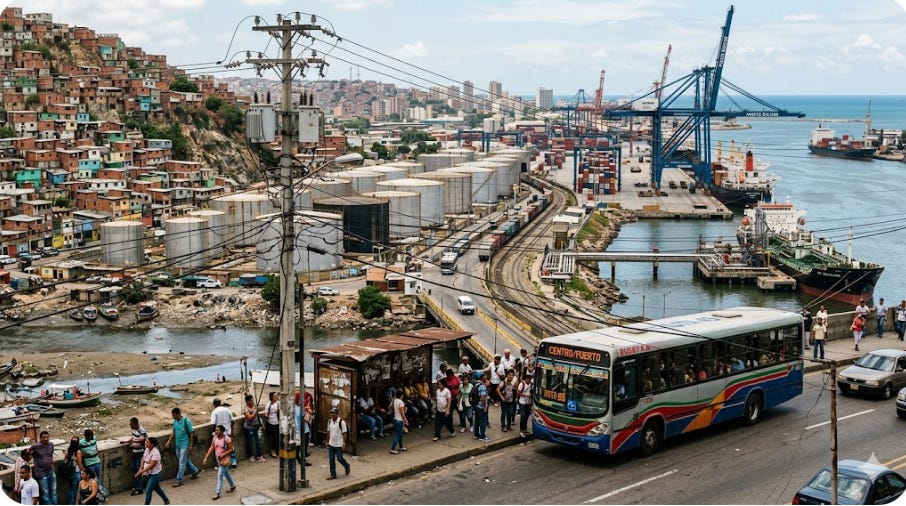
whole systems work, not just how much they produce. Shocks then reveal whether those systems can hold together. In LAC, where commodity booms can mask weak capacity, the pressures collide: service costs rise, inequality strains coalitions, and disruptions spread across sectors. When shocks and crises overlap, the only durable response is coordinated action across government. That is how countries manage trade-offs, protect basic services, and absorb the next disturbance.
Outstanding article. GDP may measure economic output, but resilient development depends on the strength of the entire ecosystem - institutions, infrastructure, governance, communities, and the capacity to adapt when shocks occur. Especially relevant for Guyana today: rapid GDP growth is encouraging, but lasting prosperity will depend on whether we build institutions, infrastructure, and resilience with the same urgency.